Stainless Steel Tanks Fabrication
Custom Process Vessels for East African Industry
Engineering integrated process systems for dairy, food, beverage, and pharmaceutical operations
Custom Tank Solutions Built for Your Process
Pelican Metal Craft specializes in custom stainless steel tank fabrication for dairy processing, food manufacturing, beverage production, and pharmaceutical operations across Kenya, Uganda, Rwanda, and Tanzania. We engineer tanks as integrated process systems - not commodity containers with welded-on fittings.
From 200-liter farm cooling tanks to 30,000-liter industrial storage vessels, every tank we fabricate incorporates sanitary design principles, material traceability, and the operational understanding that comes from 25 years serving East African industry. Our tanks are designed for the specific demands of your process, whether that means vacuum-rated vessels for evaporation systems, jacketed fermentation tanks with precise temperature control, or multi-stage CIP loops for automated cleaning validation.
Why Choose Pelican Metal Craft for Tank Fabrication
Tank Types
Complete range for every application
Capacity Range
From farm-scale to industrial processing (100L to 30,000L)
Material Grades
Certified materials with EN 10204 3.1 mill test reports
Compatible Design
Clean-in-place ready for automated cleaning
Sanitary Standards
Engineered to international sanitary principles
Warranty
Comprehensive coverage with lifetime technical support
Fabrication
Nairobi workshop, rapid delivery without import delays
Documentation
Material certificates, weld maps, hydrostatic test reports
Our Tank Fabrication Capabilities
We design, fabricate, and install stainless steel tanks and process equipment engineered to international sanitary standards for hygiene-critical applications. Our capabilities include:
Site Surveys & Process Engineering
Consultancy and spatial planning for optimal equipment integration
3D CAD Modeling
Spatial fit verification and visualization of equipment placement
TIG Welding to AWS D18.1
Execution to sanitary welding specifications with quality verification
Pressure Testing & Inspection
Hydrostatic pressure testing and dye-penetrant inspection
Surface Finishing
Electropolished finishes to Ra ≤ 0.4µm where specified
Professional Installation
On-site setup, commissioning, training, and documentation handover
We do not fabricate generic containers. We engineer microbiologically sound, thermally stable, and operationally durable systems designed for the specific demands of your process.
Tank Fabrication Portfolio - 19 Tank Types
Dairy Processing Tanks (8 Types)
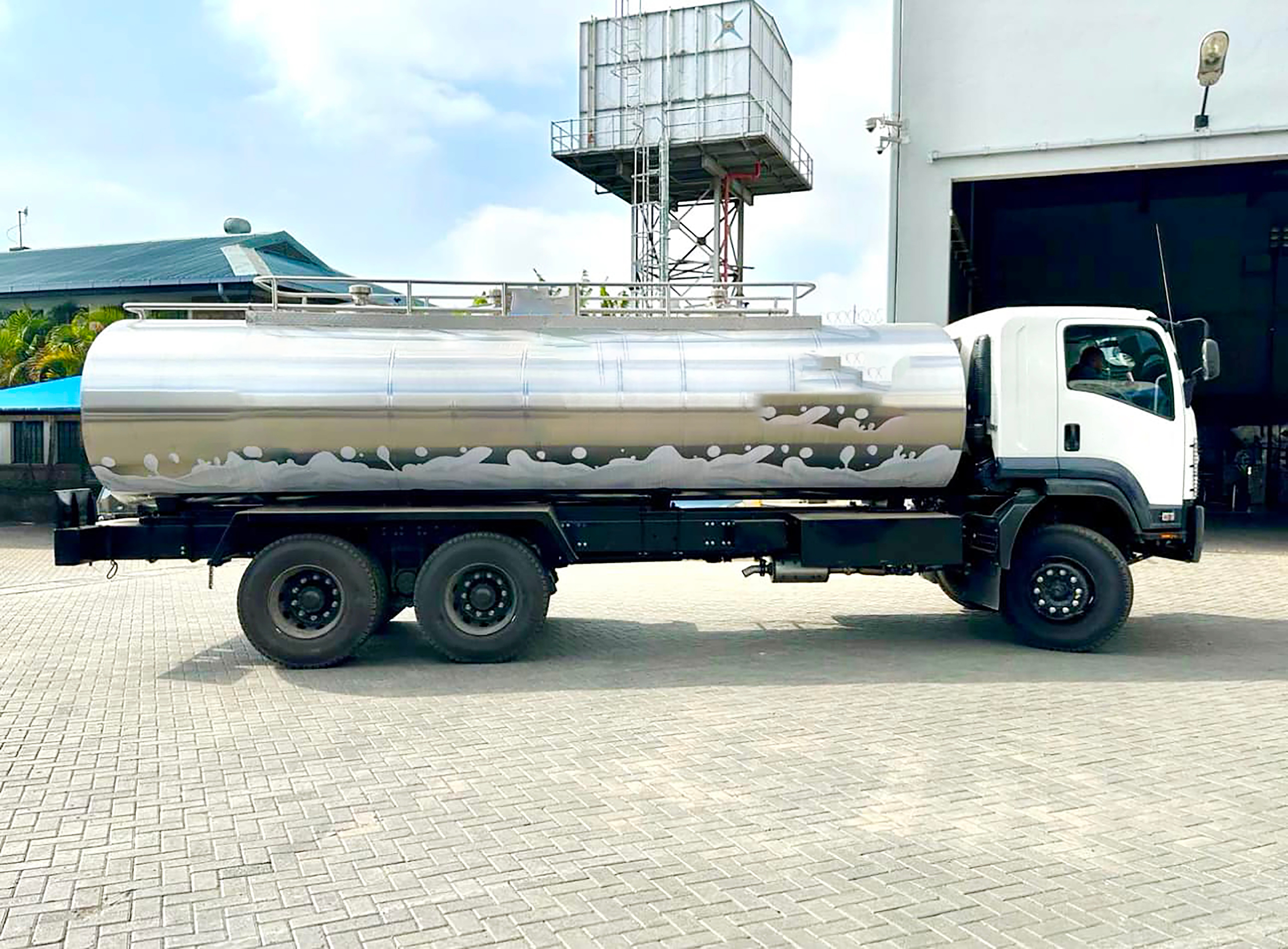
Milk Reception Tanks
Features: Insulated, CIP-ready, sloped bottom, temperature monitoring, manway access
Designed for dairy cooperatives and processors receiving milk from multiple sources. Maintains microbial quality during testing and batching. Tanks include sampling valve placement that enables representative testing and temperature maintenance that prevents microbial multiplication during collection periods.
Milk Cooling Tanks
Features: Direct expansion or ice bank cooling, insulated construction, digital temperature monitoring, alarm capability
Farm-scale and collection point cooling maintaining 4°C internal temperature against 25-35°C ambient conditions. Essential for quality-based payment systems where bacterial count determines farmer prices. Design considers electrical power reliability and operator technical capability.
Yogurt Manufacturing Tanks
Features: Jacketed construction, precise temperature control (35-45°C), CIP compatible, sample ports
Fermentation vessels with gentle heating for yogurt inoculation and incubation. Maintains consistent temperatures for culture development. Jacket design considers temperature differentials required for culture management.
Cheese Vats
Features: Coagulation and cutting capability, jacketed for temperature control, CIP compatible
Specialized vessels for cheese manufacturing with cutting blades for curd processing. Designed for traditional and industrial cheese production with proper heat transfer for milk coagulation.
UHT Milk Storage Tanks
Features: Aseptic design, high-temperature rated, insulated, CIP compatible
Storage for ultra-high temperature processed milk requiring sterile conditions. Maintains product integrity for extended shelf life with aseptic connections and sterile air filtration.
Pasteurization Balance Tanks
Features: Level control, CIP compatible, temperature monitoring ports
Buffer tanks feeding pasteurizers, ensuring consistent flow and preventing air introduction into pasteurization systems. Sized to match pasteurizer capacity or provide multi-batch buffer.
Fermentation Vessels (Dairy)
Features: Jacketed temperature control, CIP compatible, sample ports
For cultured dairy products including buttermilk, sour cream, and probiotic drinks. Precise temperature control for culture development with sample ports for culture monitoring.
Mixing/Blending Tanks (Dairy)
Features: Agitators (marine blade or anchor), baffles, VFD options, CIP compatible
For ingredient incorporation in dairy products - stabilizers in yogurt, cream standardization, and recombined milk products. Agitator selection considers product viscosity and mixing requirements.
Beverage & Juice Processing Tanks (4 Types)
Juice Processing Tanks
Features: Conical bottoms for sediment separation, sight glasses, CIP compatible, temperature jacket options
For acidic fruit juices including passion fruit, mango, citrus, and pineapple. Grade 316L is mandatory for resistance to pitting corrosion from organic acids. The 316L specification with 2-3% molybdenum prevents the pitting corrosion and stress corrosion cracking that acidic pH accelerates in standard 304 grade.
Fermentation Vessels (Beverage)
Features: Jacketed for cooling, pressure relief valves, sample ports, CIP compatible
For craft beer, wine, kombucha, and fermented beverages. Precise temperature control for yeast and culture management. Jacket design considers aggressive cooling for beer fermentation or ambient maintenance for kombucha.
Bright Beer Tanks
Features: Pressure rated (2-3 bar), carbonation capability, glycol cooling jackets, CIP compatible
For carbonated beverage storage after fermentation. Maintains carbonation levels and clarity before packaging. Designed for pressure service with appropriate safety relief devices.
Juice Holding/Storage Tanks
Features: Insulated or single-wall options, CIP compatible, level indication
Short-term and extended storage for juices and beverage ingredients. Maintains product quality between processing stages with proper temperature control where specified.
Food Manufacturing Tanks (4 Types)
Mixing/Blending Tanks (Food)
Features: Top-mounted or side-entry agitators, variable speed drives, baffles, CIP compatible
For sauces, syrups, dressings, and liquid food products. Agitator selection matched to product viscosity - marine blade for low viscosity, anchor for high viscosity, high-shear for emulsification. Baffles prevent vortex formation and ensure uniform mixing.
Sauce Processing Tanks
Features: High-shear mixers for emulsification, jacketed for heating, bottom discharge for viscous products
For tomato sauce, cooking pastes, mayonnaise, and condiments. Handles high-viscosity materials with particulate ingredients. Jacketed vessels prevent scorching during heating. Bottom discharge valves sized for viscous product flow.
Food Ingredient Preparation Tanks
Features: Mixing capability, temperature control, CIP compatible
For dissolving dry ingredients, hydrating stabilizers, and preparing liquid ingredient blends for food manufacturing. Designed for efficient incorporation of powders into liquids.
Balance/Surge Tanks (Food)
Features: Level control, CIP compatible, various configurations
Buffer tanks between processing stages, ensuring continuous operation of filling lines and downstream equipment. Prevents production interruptions during upstream batch changes.
Pharmaceutical & Cleanroom Tanks (2 Types)
Pharmaceutical Process Vessels
Features: Electropolished interior Ra ≤ 0.4µm, full documentation package, orbital welding, CIP/SIP compatible
For pharmaceutical manufacturing requiring FDA-compliant documentation. Complete material traceability with EN 10204 3.1 certificates. Weld procedure specifications and inspection records included. Designed for cleanroom installation and validation.
Chemical Dosing Vessels
Features: Level indication (sight glasses, level transmitters), metering pump connections, secondary containment options
For pharmaceutical, water treatment, and cleaning chemical preparation. Precise metering capability for accurate dosing. Material selection appropriate for chemical compatibility.
Industrial & Specialized Tanks (5 Types)
Hot Water Storage Tanks
Features: Rated for continuous 95°C service, polyurethane foam insulation, circulation pump integration, pressure relief
For CIP systems, equipment sanitization, and process hot water. Maintains temperature uniformity with minimal heat loss. Proper engineering prevents thermal shock damage, pressure surge failures, and scale accumulation.
Insulated Cold Storage Tanks
Features: Polyurethane foam insulation, vapor barrier, temperature monitoring, CIP compatible
For temperature-sensitive products requiring extended storage. Maintains product temperature within ±2°C specification. Insulation achieves R-values appropriate for ambient temperature and product hold requirements.
Ambient Storage Tanks
Features: Single-wall construction, various configurations, CIP compatible
For non-temperature-critical products, water storage, and general industrial applications. Cost-effective solution for bulk storage where temperature control is not required.
Chemical Storage Tanks
Features: Secondary containment options, chemical-resistant design, level indication
For cleaning chemicals, water treatment chemicals, and industrial fluids. Material selection based on chemical compatibility. Secondary containment considerations for spill protection.
Vacuum/Evaporation Tanks
Features: Vacuum-rated construction, structural reinforcement, dye-penetrant tested welds
For concentration, degassing, and vacuum processing applications. Engineered for negative pressure service with structural reinforcement preventing collapse under vacuum. Vacuum-tight welding with dye-penetrant inspection verification.
Advanced Mixing & Agitation Systems
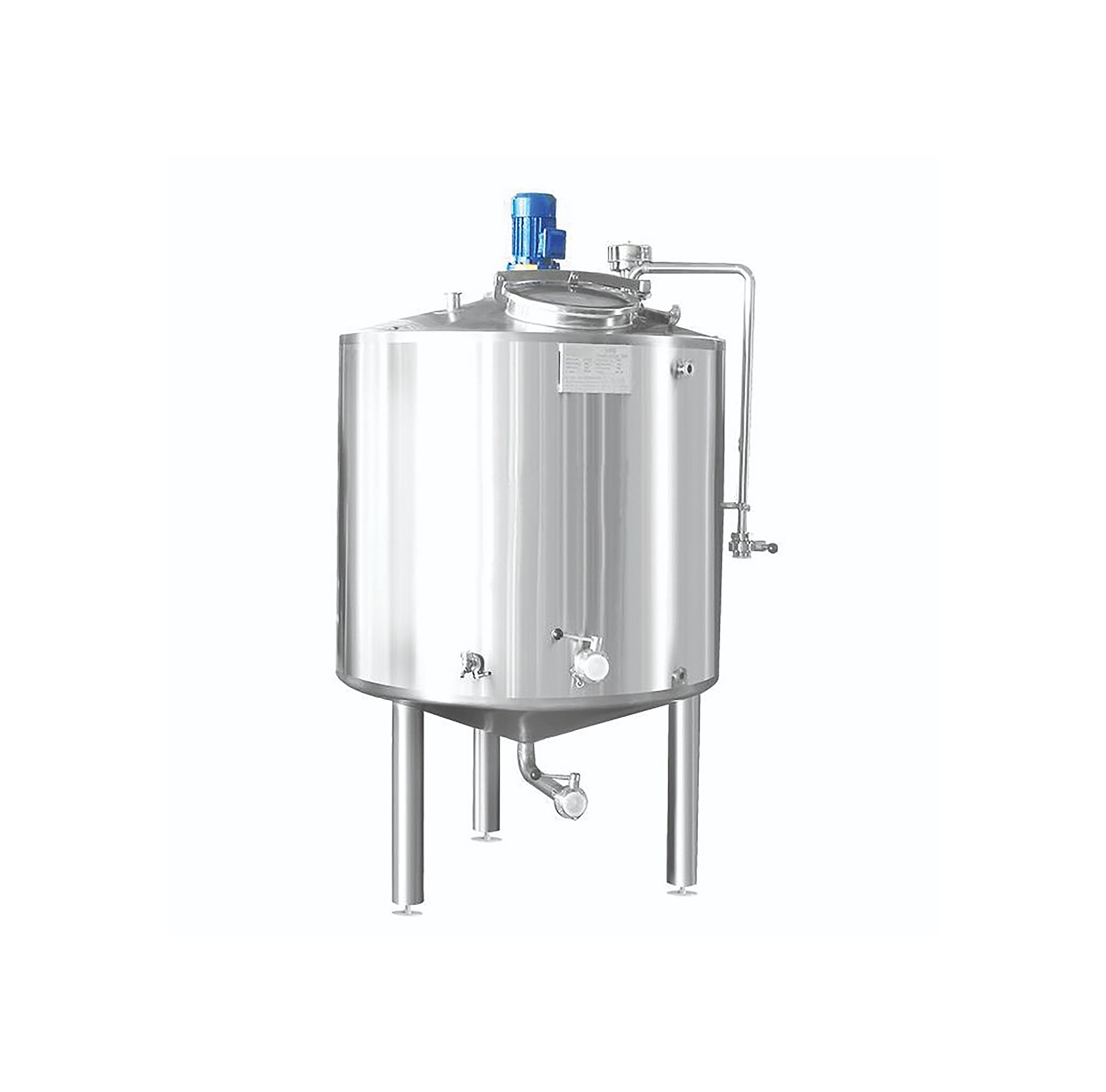
Our mixing tanks feature customizable agitation systems including marine blade, anchor, and high-shear impeller designs. Whether you need gentle mixing for delicate products or aggressive high-shear mixing for emulsification, we engineer the agitation system to match your specific process requirements.
Variable-speed drives and baffled tank designs ensure efficient, uniform mixing while minimizing energy consumption and product shear.
Material Selection for Tank Fabrication
Grade 304 Stainless Steel
18% Chromium, 8-10.5% Nickel
Suitable for: Milk and dairy products (neutral pH), hot water, ambient storage, general industrial, non-corrosive environments
Typical Tanks: Milk reception, cooling tanks, yogurt, hot water, ambient storage, paint mixing
Properties: Tensile strength 515 MPa, yield strength 205 MPa, elongation 40%
Grade 316L Stainless Steel
2-3% Molybdenum, Low Carbon
Mandatory for: Acidic products (pH below 4.5), coastal installations, pharmaceutical, chemical storage
Typical Tanks: Juice processing, chemical storage, pharmaceutical vessels, vacuum tanks
Enhanced Benefits: Superior pitting resistance, low carbon prevents sensitization during welding
Grade Selection Guidelines
Grade 304 serves neutral pH products, dry ingredient contact, and applications where chloride exposure is minimal. Grade 316L becomes essential for acidic foods (fruit juices, fermented products), products with significant salt content, coastal facility locations, and pharmaceutical applications.
Surface Finish Options
- 2B Mill Finish: Standard for most food applications, Ra approximately 0.5-1.0µm
- Electropolished Finish: Ra ≤ 0.8µm (FDA guidance for food contact) or Ra ≤ 0.4µm (pharmaceutical)
Sanitary Design Principles for Tank Fabrication
3-A Sanitary Standards Compliance
We design equipment following 3-A principles developed for dairy and food equipment:
Self-Draining Geometry
All horizontal surfaces slope minimum 2% toward discharge. All piping runs slope continuously without sag pockets where product can pool. Spray ball return lines sized to drain completely after CIP cycles.
Radiused Internal Corners
Minimum 3mm radius eliminating square corners where cleaning solutions cannot reach and bacteria can harbor.
Elimination of Dead Legs
Every pipe branch, valve connection, or instrumentation port drains completely or is isolated with sanitary diaphragm valves. Dead-ended piping creates regions where cleaning solutions don't circulate.
Smooth Internal Surfaces
All product-contact welds ground and polished smooth. No threads, crevices, or porous gaskets in product contact.
Cleanability Verification
Equipment designed with sight glasses, inspection ports, and manway access enabling verification that cleaning achieved intended results.
AWS D18.1 Sanitary Welding
We follow American Welding Society D18.1 specification for stainless steel sanitary applications:
- TIG (GTAW) welding for all product-contact surfaces producing smooth, oxide-free welds
- Back-purging with argon during welding to prevent sugaring on the weld root
- Grinding and polishing of weld beads to blend smoothly with base material
- Visual inspection standards rejecting porosity, undercut, or surface irregularities
Custom Engineering Options
Agitation Systems
Variable-speed top-entry or side-entry mixers with marine blade, anchor, or high-shear impeller designs. Agitator selection considers product viscosity, desired mixing time, and shear sensitivity.
Heating/Cooling Jackets
Dimpled jacket or half-pipe coil construction for steam, hot water, glycol, or direct expansion refrigeration. Jacket design considers temperature differentials, required heating/cooling surface area, and temperature ramp rates.
Pressure Rating
ASME-informed design for pressure vessels with appropriate safety relief devices. We design to ASME principles though not certified for ASME stamping.
Vacuum Rating
Structural reinforcement for negative pressure service in evaporation or degassing applications.
Electropolished Finish
Ra ≤ 0.4µm interior surface for pharmaceutical and ultra-sanitary applications.
Automated Controls
PLC integration, temperature controllers, level switches, and process instrumentation.
Skid Mounting
Pre-assembled process skids with tanks, pumps, valves, and piping for turnkey installation.
Tank Fabrication Process
Site Survey & Requirements Definition
Every fabrication project begins with site assessment and process understanding. Our engineering team visits your facility to measure available space, evaluate utility connections, understand your process workflow, document regulatory requirements, and identify operational priorities. This consultation eliminates the design revisions and installation complications that occur when equipment is specified without understanding the physical constraints and process requirements of the actual installation location.
Design Engineering & 3D Modeling
Based on site survey data and process requirements, we develop detailed equipment specifications including tank capacity calculations, material grade selection and thickness specifications, fabrication drawings with weld details, and structural support requirements. Where spatial integration matters, we provide 3D CAD visualization showing equipment placement, piping routing, and operator access.
Workshop Fabrication
All fabrication occurs in our controlled Nairobi workshop environment where we maintain welding procedure specifications, quality inspection protocols, and material traceability documentation. This includes precision cutting and forming using CNC plasma and shearing equipment, TIG welding on all product-contact surfaces, grinding and polishing achieving specified surface finishes, hydrostatic pressure testing for pressure-rated vessels, and quality inspection including visual examination, dye-penetrant testing on critical welds, and dimensional verification.
On-Site Installation & Commissioning
Professional installation teams handle equipment delivery, rigging and positioning, piping connections and utility hookups, and leak testing. Commissioning includes functional testing of all valves, agitators, temperature control systems, operator training, and documentation handover.
Warranty & Long-Term Support
Every fabricated system includes 24-month warranty coverage on materials and workmanship with lifetime technical support. We maintain spare parts inventory for common wear items and provide emergency service response for critical production interruptions.
Ready to Engineer Your Custom Tank System?
Contact Pelican Metal Craft today for a confidential consultation about your tank fabrication requirements.